


Melasma & Pigment Management
in West Point, Utah
Personalized treatment for melasma, sun damage and stubborn pigmentation using advanced laser technology and professional skincare. Serving West Point, Syracuse, Layton, Clearfield, Clinton, Sunset and surrounding Davis and Weber County communities.
What Is Melasma?
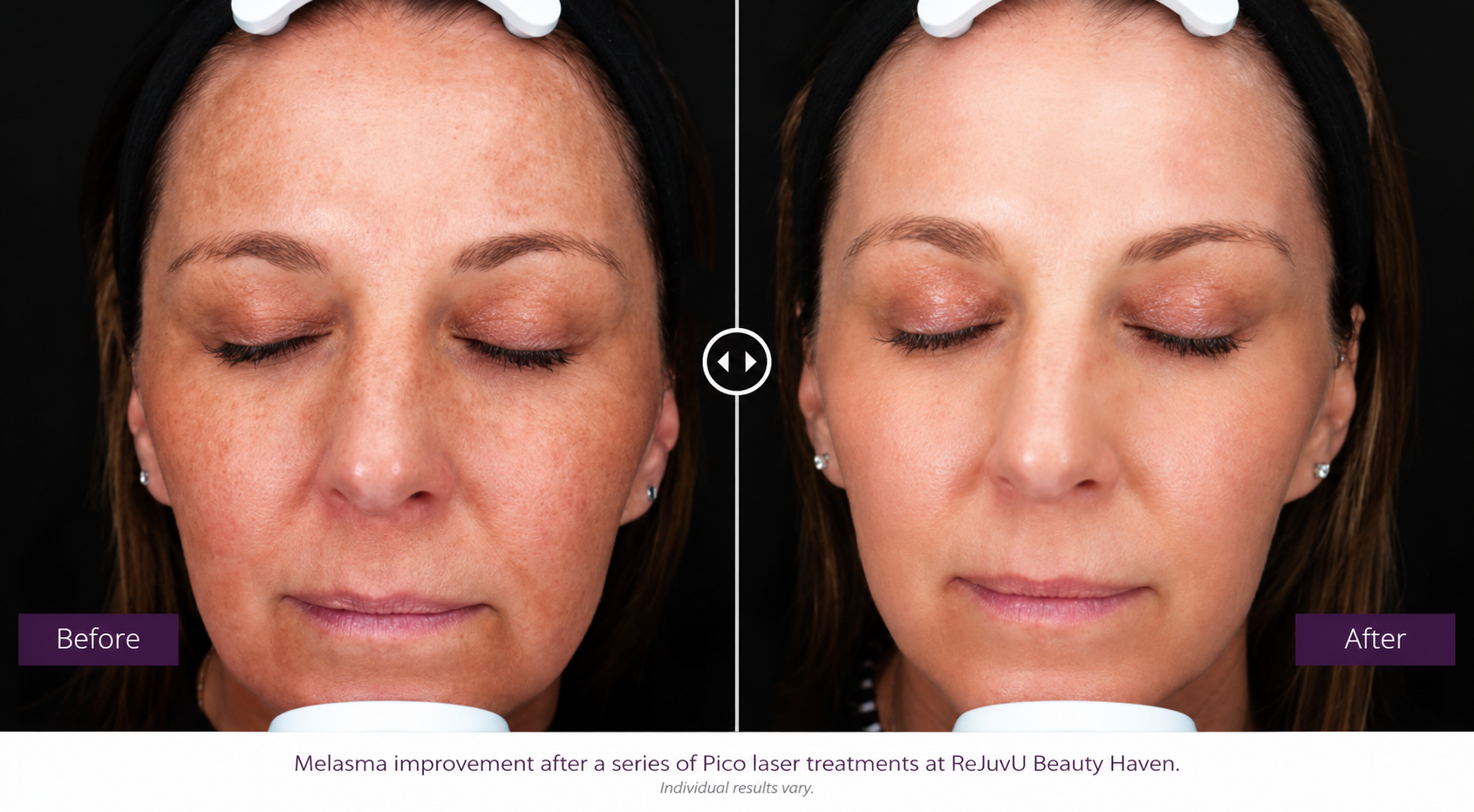
Melasma is a common form of hyperpigmentation that causes patches of brown, tan or gray-brown discoloration, most often on the cheeks, forehead, upper lip and other areas of the face.
Unlike a typical sun spot, melasma can be influenced by several factors, including sun exposure, heat, hormones and genetics. It may become more noticeable during the summer months or after periods of increased sun exposure.
One of the reasons melasma can be challenging is that it tends to be chronic and recurring. Even after pigmentation improves, triggers such as UV exposure, visible light, heat or hormonal changes can cause it to return.
That’s why we approach melasma as something to manage—not simply a spot to remove.
At ReJuvU Beauty Haven, the first step is understanding what type of pigmentation you have and what may be contributing to it. From there, we can develop a personalized plan that may include Pico laser treatments, professional skincare, chemical peels and consistent sun protection, depending on your skin and individual needs.
Melasma vs. Sun Damage: What’s the Difference?
Melasma and sun damage can both cause areas of discoloration, but they don’t always behave the same way—and they may not respond to the same treatments.
Sun damage, sometimes seen as sun spots or age spots, often appears as more defined areas of brown pigmentation that develop after years of UV exposure. These spots may respond well to treatments designed to target excess pigment, such as IPL or certain laser treatments.
Melasma more commonly appears as patches of pigmentation, often in a symmetrical pattern across areas such as the cheeks, forehead or upper lip. It can be influenced by sun exposure as well as hormones, heat and other triggers, which can make it more likely to recur.
Why the Difference Matters
Treating every brown spot the same way isn't always the best approach. A treatment that is appropriate for visible sun damage may not be the right choice for melasma.
That’s why we recommend identifying the type and pattern of pigmentation before choosing a procedure. At ReJuvU Beauty Haven, we can use VISIA skin analysis as part of your consultation to help evaluate visible and underlying pigmentation and better understand your overall skin condition.
From there, we can create a treatment plan based on your pigmentation, skin type, history and goals rather than simply choosing a laser because it targets brown pigment.
How We Treat Melasma at ReJuvU
There isn’t one treatment that is right for every case of melasma. Because pigmentation can vary in depth, pattern and triggers, our approach begins with evaluating your skin and creating a plan designed around your individual needs.
Depending on your skin, your treatment plan may include Pico laser treatments, customized chemical peels, professional home care and ongoing sun protection. In many cases, managing melasma is less about relying on one treatment and more about using the right combination of strategies over time.
Pico Laser for Melasma & Stubborn Pigmentation
At ReJuvU Beauty Haven, we use Pico laser technology to deliver extremely short pulses of energy that target unwanted pigment while minimizing heat delivered to the surrounding skin.
Pico laser may be considered as part of a personalized treatment plan for:
- Melasma
- Stubborn pigmentation
- Sun spots and age spots
- Uneven-looking skin tone
Because melasma can be reactive and recurring, more aggressive treatment isn't necessarily better. Treatment settings, timing and the overall plan should be selected according to your skin and how your pigmentation responds.
Customized Chemical Peels for Pigmentation
Laser treatment isn’t the only tool we may use when managing melasma and uneven pigmentation. Depending on your skin, a customized chemical peel may be incorporated into your treatment plan to support exfoliation, improve the appearance of uneven skin tone. and encourage healthier skin renewal.
At ReJuvU Beauty Haven, we customize—or “cocktail”—our chemical peels based on your skin and the concerns we’re targeting rather than using the same peel for everyone. For pigmentation concerns, this may include carefully selected peel formulations and, when appropriate, our 4% or 6% retinol peel options.
Because melasma can be reactive, the type and strength of peel should be selected thoughtfully. The goal is not simply to use the strongest peel available, but to choose an approach that complements your overall melasma-management plan.
Professional Skincare for Melasma & Pigmentation
Melasma management doesn’t stop when you leave the treatment room. What you use on your skin every day can be an important part of maintaining results and helping manage recurring pigmentation.
A personalized home-care routine may include products selected to help brighten the appearance of uneven pigmentation, support healthy skin renewal, strengthen the skin barrier and protect against environmental factors that can contribute to discoloration.
Daily broad-spectrum sunscreen is especially important when managing melasma. Because UV exposure and visible light can contribute to pigmentation, consistent protection is an essential part of both your treatment plan and long-term maintenance.
At ReJuvU Beauty Haven, we carry professional skincare from SkinMedica®, ALASTIN Skincare® and Eminence Organic Skin Care®. Rather than recommending the same routine for everyone, we can help select products based on your skin, current treatments and pigmentation concerns.
Sun Protection & Long-Term Melasma Management
Because melasma tends to be chronic and recurring, maintaining improvement is just as important as treating visible pigmentation.
Consistent sun protection is one of the most important parts of a melasma-management plan. Daily broad-spectrum sunscreen, protective clothing and minimizing unnecessary sun and heat exposure can help reduce triggers that may cause pigmentation to become more noticeable again.
Even after your skin improves, your plan may evolve over time. Periodic treatments, adjustments to professional skincare and continued sun protection can all play a role in maintaining your results.
Our goal isn’t simply to improve the pigmentation you see today—it’s to help you develop a thoughtful strategy for managing your skin long term.
What to Expect at Your Melasma Consultation
Treating pigmentation starts with understanding what type of pigmentation you have, what may be contributing to it and how your skin is likely to respond to treatment.
At your skin consultation at ReJuvU Beauty Haven, we’ll discuss your concerns, skin history, previous treatments, current skincare routine and factors that may be contributing to your pigmentation.
Your consultation also includes a VISIA® skin analysis, which allows us to evaluate characteristics of your skin that may not be as easy to see with the naked eye. This can help us better understand pigmentation, sun damage and your overall skin condition before recommending treatment.
From there, we’ll develop a personalized plan that may include Pico laser treatments, customized chemical peels, professional skincare, sun protection or a combination of approaches over time.
Because melasma can be reactive and recurring, your plan may change based on how your skin responds. Our goal is to treat thoughtfully rather than simply treating pigmentation as aggressively as possible.
Your Skin Consultation Includes:
• A discussion of your pigmentation concerns and treatment history
• Review of your current skincare routine
•
VISIA® skin analysis
• Evaluation of appropriate treatment options
• Personalized professional skincare recommendations
• A plan for treatment, maintenance and sun protection
Skin consultations include VISIA® skin analysis. $75 consultation fee may be applied toward the purchase of a treatment within 30 days.
Melasma & Pigmentation FAQs
How many treatments will I need for melasma?
It can. Even when pigmentation improves significantly, melasma can recur when it is exposed to triggers such as UV light, visible light, heat or hormonal changes. Consistent sun protection, appropriate home care and periodic maintenance may help preserve your improvement.
Is Pico laser good for melasma?
Pico laser technology may be appropriate for some people with melasma because it delivers extremely short pulses of energy to target unwanted pigment. However, not every case of melasma should be treated the same way. At ReJuvU Beauty Haven, we evaluate your skin, pigmentation pattern and treatment history before determining whether Pico laser should be part of your treatment plan.
Can IPL be used to treat melasma?
IPL can be very effective for certain types of sun damage and pigmentation, but melasma behaves differently. Heat and light-based treatments can sometimes aggravate melasma, so IPL is not automatically the right choice simply because pigmentation is present. We recommend identifying the type of pigmentation first and then selecting treatment accordingly.
What is the difference between melasma and sun spots?
Sun spots are generally associated with cumulative UV exposure and often appear as more defined areas of pigmentation. Melasma more commonly develops in patches and may be influenced by sun exposure, visible light, heat, hormones and genetics. Because the conditions can behave differently, the treatment that works well for a sun spot may not be the best approach for melasma.
Can melasma be permanently removed?
Melasma is generally considered a chronic, recurring pigmentation condition rather than something that can always be permanently eliminated. Treatment can significantly improve the appearance of pigmentation, but sun exposure, heat, hormonal changes and other triggers may cause it to return. That’s why we focus on long-term melasma management, including appropriate treatments, professional skincare and consistent sun protection.
Will my melasma come back after treatment?
It can. Even when pigmentation improves significantly, melasma can recur when it is exposed to triggers such as UV light, visible light, heat or hormonal changes. Consistent sun protection, appropriate home care and periodic maintenance may help preserve your improvement.
What skincare is best for melasma and pigmentation?
The best routine depends on your skin and the type of pigmentation being treated. In general, a melasma-focused routine may include products that support healthy skin renewal, improve the appearance of uneven pigmentation and protect the skin from environmental exposure. Daily broad-spectrum sunscreen is especially important. At your consultation, we can recommend professional skincare based on your individual needs.
How do I know whether I have melasma or another type of pigmentation?
Pigmentation can have several causes, and different conditions can look similar. At ReJuvU Beauty Haven, we begin with a skin consultation and VISIA® skin analysis to evaluate your visible and underlying pigmentation, skin condition and treatment history before recommending a plan.
Ready to Create a Plan for Your Pigmentation?
Melasma and pigmentation aren’t one-size-fits-all concerns. Start with a personalized skin consultation so we can evaluate your skin, identify appropriate treatment options and create a plan designed around your needs.
Skin consultations include VISIA® skin analysis. $75 consultation fee may be applied toward the purchase of a treatment within 30 days.